Maps and Other Stories
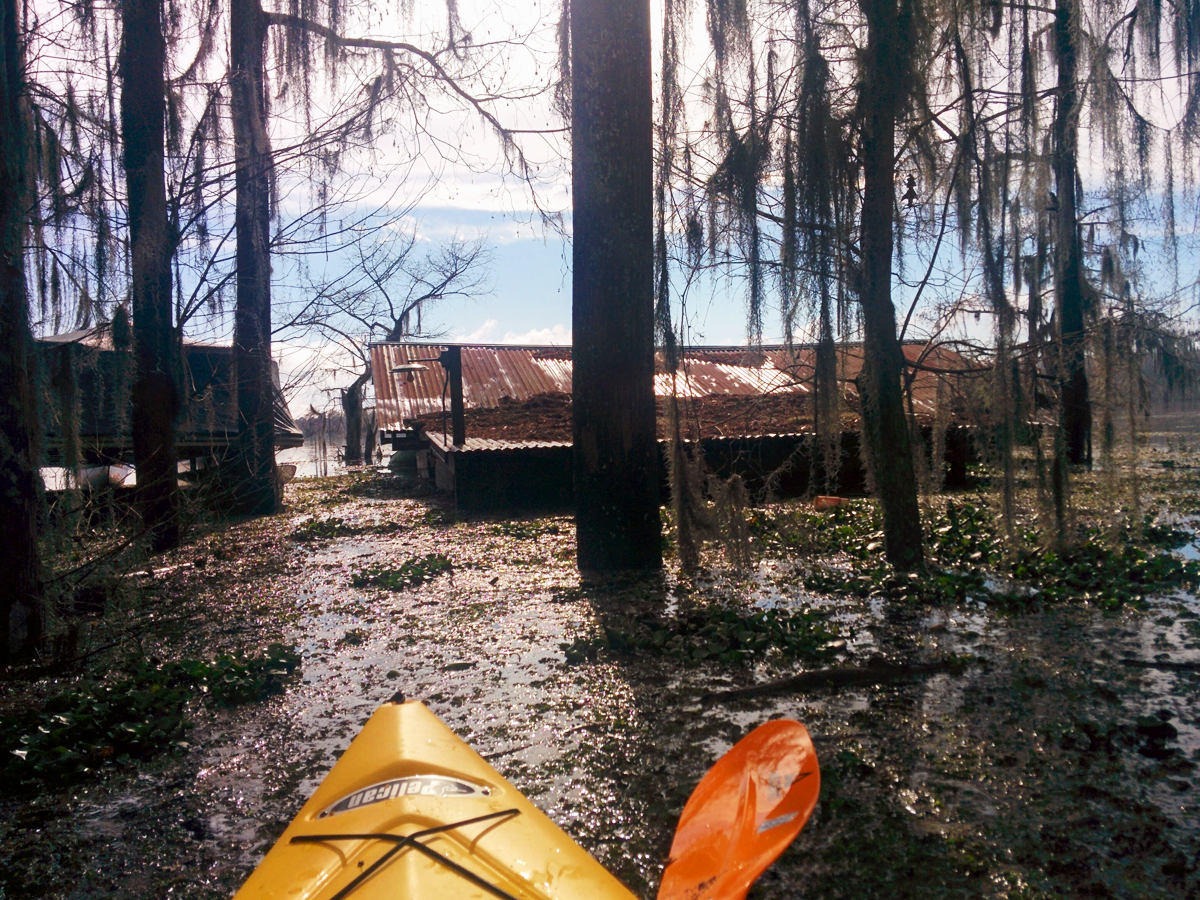
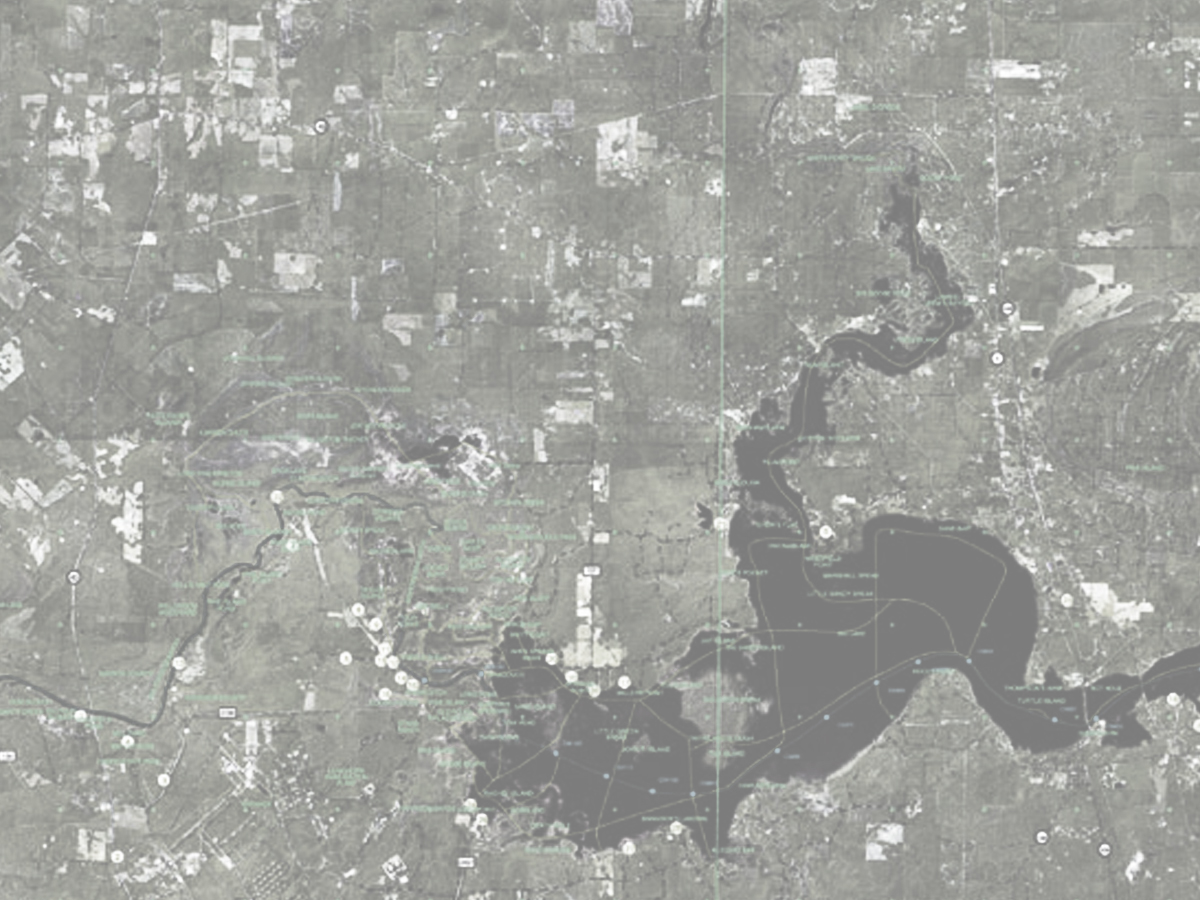
In a map view of the lake, Caddo appears blue and neatly bounded, wide banks circling open waters. But maps are always fiction. Taking an aerial, satellite view, from overhead the dense cypress trees turn the whole lake from green to rust to grey with the seasons and all sense of the shape of the lake is lost in forested waters. On the water below, the green means that jet ski pilots, feeling the effects of afternoons full of Coors, might lose their way from the idyllic rope swings and clear waters of the river full of folks sunbathing on rafts and sliding off docks. They lose their way and arrive in the big lake via the bayou, where the murky water hides a 10-foot bed of moss and silt.
My neighbor, Don, gruff and pleasant, will yell for his dog, Whiskey, to stop barking off the end of the dock. Don will lumber to the dock and eventually call out to the lost jet skier, “Y’all alright?” and offer directions back to the recreational part of the lake more suited for jet skis.
When the cypress fade to rust-colored, huddled tree stands, the shooting begins. In the chilled October mornings, camouflaged hunters navigate the lake in moss-dressed boats. Ducks skim their feet across the water as they flee.
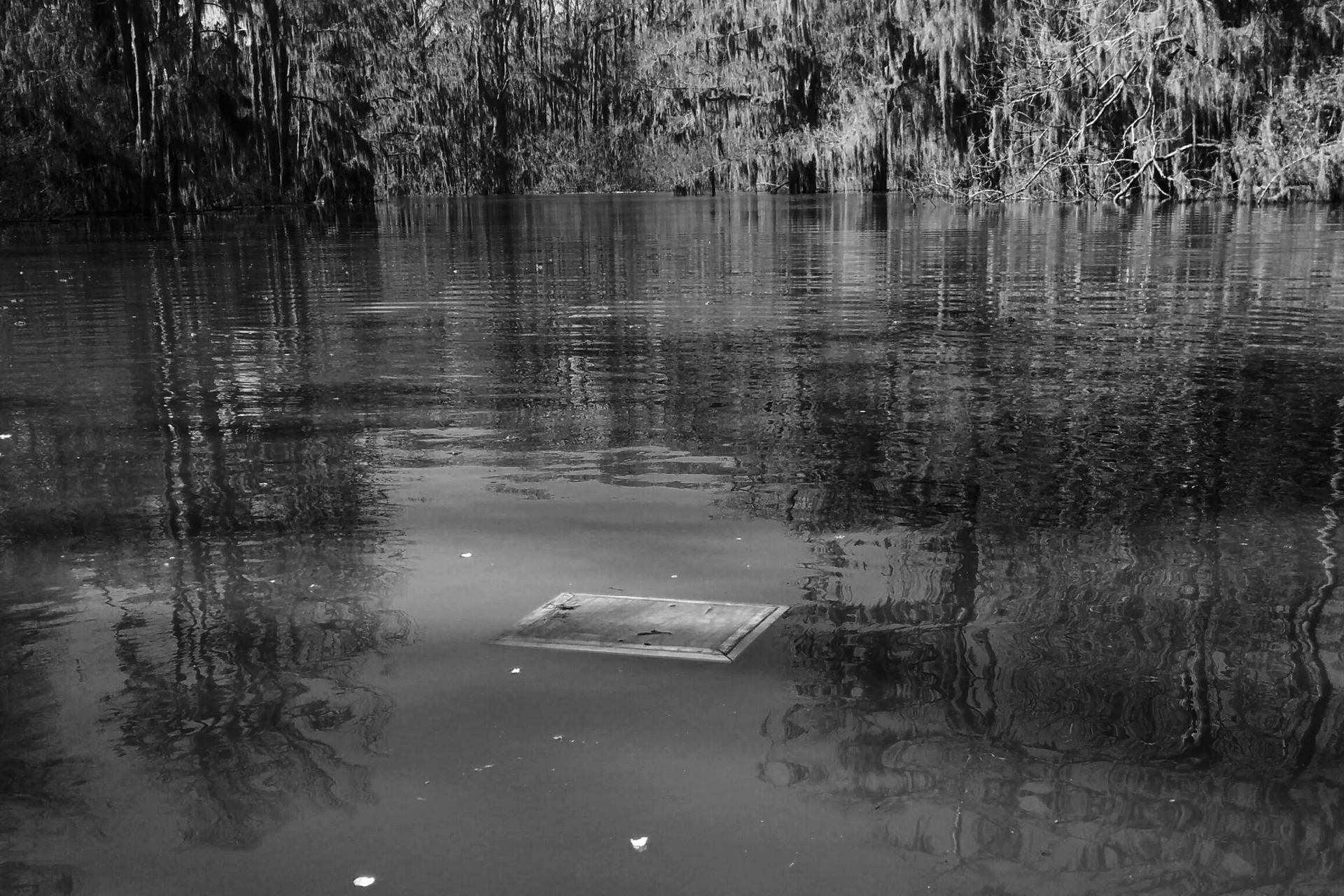
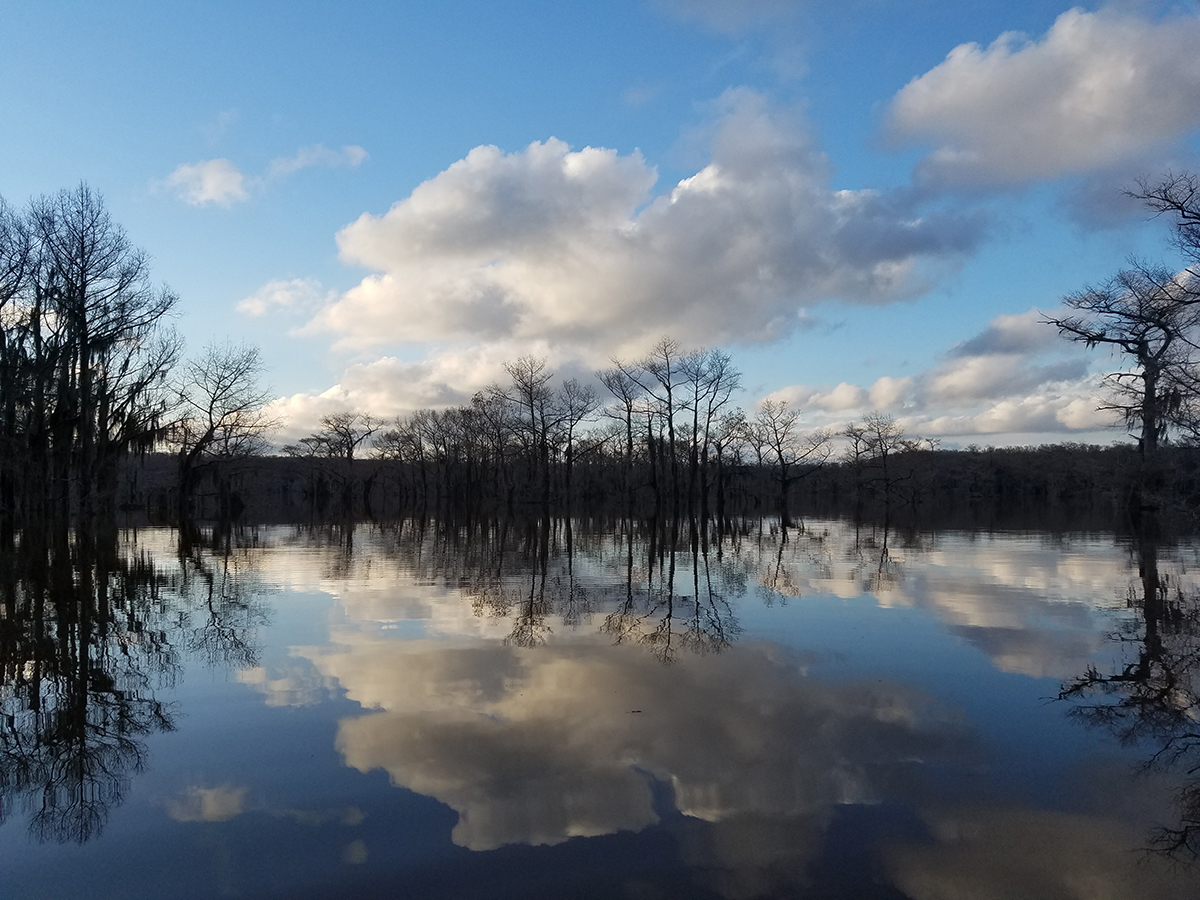
In winter, the sky and lake and spanish moss turn the same color gray, making it hard to tell which reflects the other.
The place, Caddo Lake, is fraught, as all places are, with competing narratives of place. It is livelihood, recreation, hunting ground, sacred homeland; colonized, historicized, re-historicized, mythologized, exoticized; exploited and protected.
I have but one story of the place, but there are others that can and should be told.